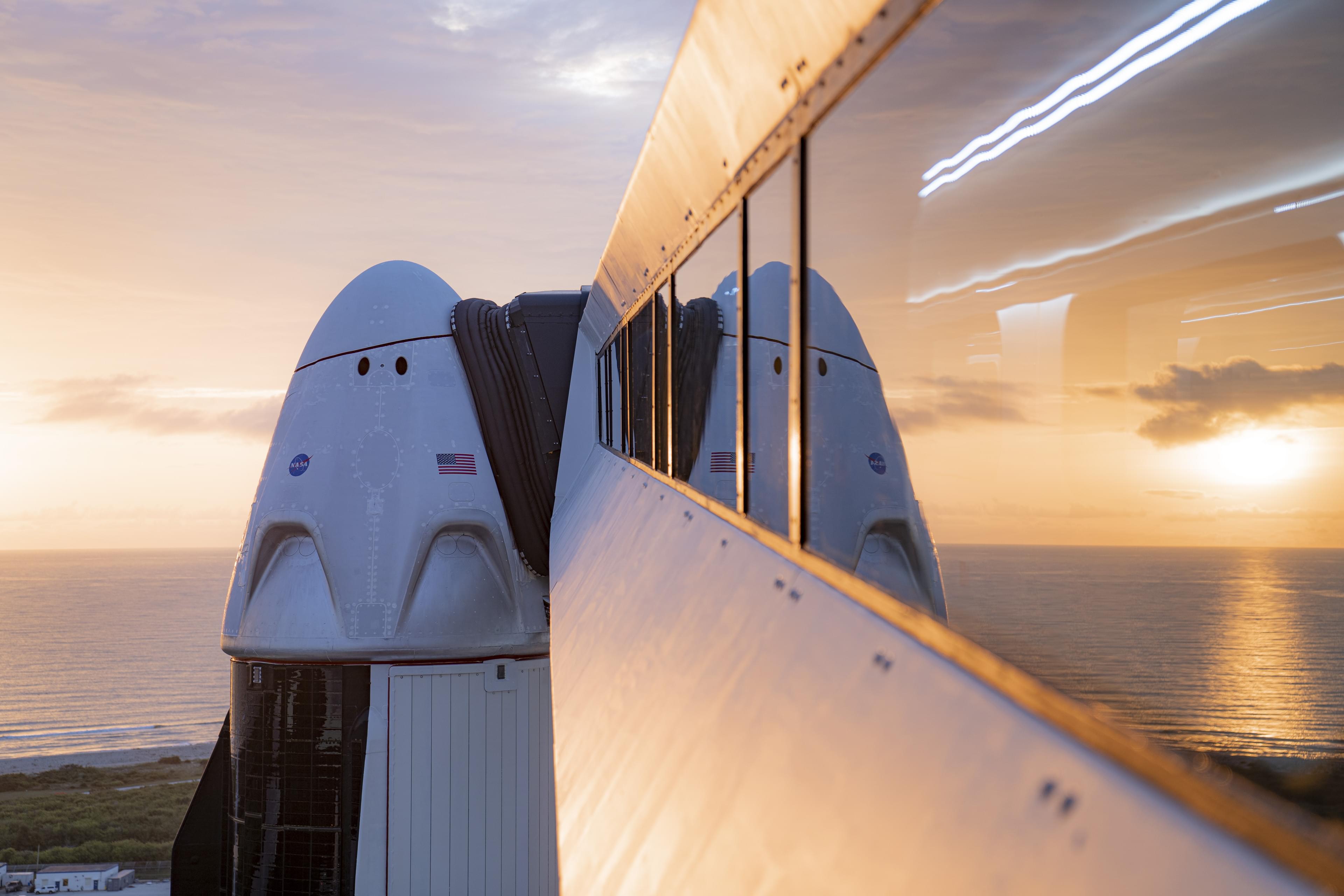
While the broader market fixates on the latest AI chip advancements or search engine algorithm shifts, a massive dormant asset is sitting on the Alphabet Inc. balance sheet. In January 2015, Google (now Alphabet) made a strategic move that was widely criticized by skeptics but is now positioned to be one of the most lucrative venture investments in corporate history. By joining forces with Fidelity to inject $1 billion into SpaceX, Google secured a significant portion of the then nascent aerospace company. As the 2026 SpaceX initial public offering approaches, the technical breakdown of Google's stake reveals a potential windfall that could redefine the company's capital reserves.
The original 2015 investment was driven by a shared vision for global connectivity. At the time, Google was interested in satellite technology to expand internet access to underserved regions, a mission that eventually became the Starlink constellation. By providing capital when SpaceX was valued at approximately $12 billion post money, Google acted as a cornerstone investor. Over the last eleven years, through multiple rounds of secondary offerings and internal valuation adjustments, that stake has matured significantly. Understanding the exact percentage owned today requires an analysis of the dilution events that have occurred as SpaceX raised capital for its Starship and Starlink programs.
The Math of the 2015 Entry and Dilution
In the initial $1 billion round led by Google and Fidelity, it was reported that the two entities combined for a 10 percent stake in SpaceX. Based on the $12 billion valuation at that time, Google's individual contribution was estimated at $900 million, granting them roughly 7.5 percent of the company in 2015. However, SpaceX has not been stagnant in its capital requirements. Between 2015 and 2026, the company has raised tens of billions of dollars to fund the development of the Starbase facility in Texas and the massive deployment of the Starlink v2 and v3 satellites.
Standard venture capital dilution for a company growing at the rate of SpaceX typically ranges from 20 percent to 40 percent over a decade. Financial analysts at the Oort Cloud Report estimate that Google's stake has been diluted to approximately 4.8 percent to 5.2 percent of the total equity in 2026. This percentage accounts for the issuance of new shares to employees via stock option plans and the massive private funding rounds that boosted the pre IPO valuation to $210 billion in late 2025. Even with this dilution, a 5 percent stake in a company targeting a trillion dollar market cap represents a massive concentration of value.
Projected IPO Value: Google’s Exit Potential
As the SpaceX IPO target date moves into the second half of 2026, the investment community is debating the final opening price. Most Tier 1 banks are modeling a conservative opening at $1.5 trillion, citing the recurring revenue of Starlink as the primary driver. In this scenario, Google’s estimated 5 percent stake would be valued at $75 billion. When compared to the original $900 million check written in 2015, this represents a staggering return of over 8,200 percent. On the balance sheet, this would appear as a massive unrealized gain, potentially leading to a significant special dividend or an aggressive stock buyback program for Alphabet shareholders.
In more bullish scenarios, the valuation could reach $2 trillion if Starship demonstrates orbital refueling and the "direct to cell" satellite market proves its scalability. At a $2 trillion valuation, Google’s stake climbs to $100 billion. For context, Alphabet's entire cash and cash equivalents position in early 2026 sits at roughly $110 billion. A single investment maturing into a $100 billion liquid asset would effectively double the company's war chest overnight, providing the capital necessary to dominate the ongoing AI infrastructure race without taking on additional debt.
Google ROI Matrix: SpaceX IPO Projections
| IPO Valuation | Est. Google Stake (5%) | Net Profit on $900M Base | Multiple of Investment |
|---|---|---|---|
| $1.0 Trillion | $50.0 Billion | $49.1 Billion | 55.5x |
| $1.25 Trillion | $62.5 Billion | $61.6 Billion | 69.4x |
| $1.5 Trillion | $75.0 Billion | $74.1 Billion | 83.3x |
| $1.75 Trillion | $87.5 Billion | $86.6 Billion | 97.2x |
| $2.0 Trillion | $100.0 Billion | $99.1 Billion | 111.1x |
The Strategic Integration Factor
It is a mistake to view Google's stake in SpaceX as a purely financial endeavor. The technical synergy between the two companies has deepened throughout 2026. Google Cloud currently serves as the backbone for much of the Starlink ground station data processing. By owning a significant portion of the launch provider, Google secures its supply chain for future orbital compute nodes. There are ongoing technical discussions regarding the deployment of specialized TPU (Tensor Processing Unit) clusters directly into Starlink satellites, which would allow for edge AI processing in orbit. This "Orbital Cloud" would be a proprietary advantage for Google, made possible by their early entry as a SpaceX equity partner.
Furthermore, Google’s ownership provides a strategic hedge against other satellite internet competitors like Amazon’s Project Kuiper. While Amazon must pay market rates (or build its own rockets) to launch its constellation, Google sits on the board of the most efficient launch provider in history. This relationship has allowed Google to integrate Starlink connectivity directly into the Android ecosystem for emergency messaging and remote data syncing, bypasses the traditional telecom carrier bottlenecks. The financial windfall of the IPO is simply the "cherry on top" of a decade long strategic alignment that has given Google a permanent foothold in the space economy.
Regulatory and Market Challenges
Despite the glowing projections, there are hurdles to a smooth liquidation of this stake. The SEC and FTC have both signaled increased scrutiny over "Big Tech" owning significant portions of critical infrastructure. Alphabet may be forced to divest its SpaceX shares over a structured five year period to avoid antitrust concerns, rather than selling all at once during the IPO "pop." This staggered exit might actually benefit Alphabet shareholders by allowing the stock to continue appreciating as SpaceX ventures further into lunar and Martian logistics in the late 2020s.
There is also the question of market liquidity. An IPO of this magnitude requires a massive amount of buyer capital. If the global economy faces a downturn in late 2026, the valuation may be pressured downward. However, given that SpaceX is currently generating positive cash flow from its Falcon 9 launches and Starlink subscriptions, it is less vulnerable to interest rate fluctuations than traditional "growth" tech stocks. For Google, the primary risk is not a loss of principal but a delay in the realization of these gains. Even at a "disappointing" valuation of $800 billion, Google would still walk away with over $40 billion, making it one of the most successful corporate venture capital moves in history.
Conclusion: A Masterclass in Long-Term Thinking
The story of Google’s investment in SpaceX is a testament to the power of asymmetric bets. In 2015, $900 million felt like a massive risk for a company that was still struggling to land its first stage boosters consistently. In 2026, that same investment is a cornerstone of Alphabet’s future financial health. As the SpaceX IPO ticker finally appears on the public exchanges, Google will not just be watching as a fan of space exploration, but as a primary beneficiary of the most successful aerospace company ever built. Whether the final take is $75 billion or $100 billion, the message is clear: Google’s early move into the stars has paid off in ways that few could have calculated a decade ago.
